
The Quiet Brain Drain: Why Your Best Operators Are Your Biggest Risk
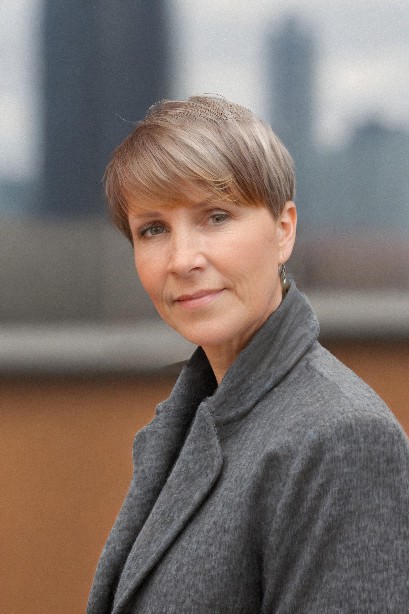
Traci McQueen
Fractional COO
The Quiet Brain Drain: A Founder-Level Risk Hiding on Your Factory Floor
For 35 years, I’ve walked factory floors. I’ve seen the triumph of a perfectly tuned production line and the quiet frustrations that never make it to the boardroom.
In all that time, the most dangerous problem I’ve seen is the one that walks out the door at 5 PM on a Friday for the last time.
It is the master machinist who knows the temperament of a 30-year-old lathe by sound. The shift supervisor who can predict a supply chain disruption from the tone of a vendor email. The welder whose unwritten technique is the only reason a complex job is profitable.
These are your best operators. And they are your biggest risk.
This is not an HR issue. It is a founder-level problem. The slow, silent erosion of institutional knowledge, what I call the Quiet Brain Drain, is a direct threat to your company’s financial health and competitive advantage.
The Real Cost of a Gold Watch
When an experienced operator retires, they take a library of unwritten knowledge with them.
This is not just a people problem. It is a financial risk that shows up in subtle, corrosive ways.
Production delays
The new technician does not know the undocumented trick, and a $500,000 machine sits idle for a day. That is not a training issue. That is a six-figure knowledge gap.
Quality issues
A critical process was never documented, and scrap rates climb. You are not just losing material. You are losing reputation.
Lost competitive advantage
Your company’s secret sauce was never a recipe. It was a person. And they just left.
Founders understand that a problem on the floor becomes a problem in the P&L. Yet too often, preservation of operational knowledge gets delegated to managers who are equipped to execute tasks, not mitigate systemic risk.
Founder Thinking vs. Manager Execution
Managers create checklists and SOPs. That is execution.
Founders ask different questions.
❓What knowledge is truly critical?
❓Where are our single points of human failure?
❓How do we build a culture where knowledge is shared rather than hoarded?
Solving the Quiet Brain Drain requires founder-level thinking. It requires identifying what matters most, building systems to capture it, and making knowledge transfer part of the operational culture instead of a last-minute scramble.
This is about building resilient infrastructure, not writing manuals.
From the Floor, Not the Boardroom
This is not about more reports. As I often say, I do not write reports. I fix floors.
It is about practical systems that capture and transfer knowledge before it disappears. It is about turning decades of individual experience into a durable company asset.
My career in chemical manufacturing, including a 15-year zero OSHA incident record, reinforced a critical truth. Operational discipline is not just about safety. It is about building systems that still work when the people who built them are gone.
Safe plants are profitable plants. Resilient plants preserve what their best people know.
The Quiet Brain Drain is just one of the hidden operational leaks eroding profitability. The same lack of systemic thinking often shows up in the very first step of manufacturing: the quote. But that is a conversation for another day.
For now, ask yourself:
If your most experienced operator walked out tomorrow, what part of your business would leave with them?
About the Author
This article was written by a Founding Member of the Fractional Founders Network, where exited founders provide advisory, operator, and fractional leadership support to active founders.
If your business needs founder-level thinking to solve operational risk, scale responsibly, or close hidden execution gaps, explore the network and connect with experienced operators who have built and exited companies themselves.
Founders helping founders.
Written by
Traci McQueen
Fractional COO
Fractional COO and operations leader with 35 years of experience translating boardroom strategy into shop-floor execution, primarily in chemical manufacturing. I specialize in the "messy middle"—scaling production, M&A integration, and building people-centric safety cultures that drive sustainable growth. My commitment to operational discipline is evidenced by a 15-year zero OSHA record. I am currently launching the Utah Manufacturing Leaders Roundtable to support founders navigating complex operational challenges. I lead with authoritative experience and a human-centric approach, ensuring both discipline and employee engagement are maximized.
View full profile